When it comes to painting, artists know that the choice of brush can make all the difference. From creating fine details to bold strokes, each brush has its own unique characteristics that influence the final outcome of a piece.
In this quick guide, we’ll explore the various types of artists’ brushes, their features, and the preferences of successful artists.
Understanding Brush Types:
Round – These versatile brushes have a pointed tip and a round ferrule, making them suitable for a variety of techniques, from detailed work to broad washes. They are a staple in many artists’ toolkits.
Flat – With a square-shaped tip and long bristles, flat brushes are ideal for creating sharp edges and precise lines. They are commonly used for covering large areas and applying bold strokes of color.
Filbert – Combining the characteristics of round and flat brushes, filbert brushes have a rounded tip and slightly flattened bristles. They are great for blending and creating soft, rounded shapes.
Fan – Characterized by their fan-shaped bristles, these brushes are perfect for creating texture, blending colors, and adding delicate details such as foliage or fur.
Detail – These small, pointed brushes are designed for intricate work and fine details. They are indispensable for adding highlights, refining edges, and creating intricate patterns.
Bright – A short, flat-bristled brush with edges that curve slightly to the center. Bright brushes are used for applying short, strong strokes of color.
Angle – These paintbrushes are flat with an angled edge. These are great for painting lines and filling in corners.
Mop – A large, round brush that hold more water than a round brush. It’s used to cover large areas in watercolor.
Preferred Brushes of Famous Artists:
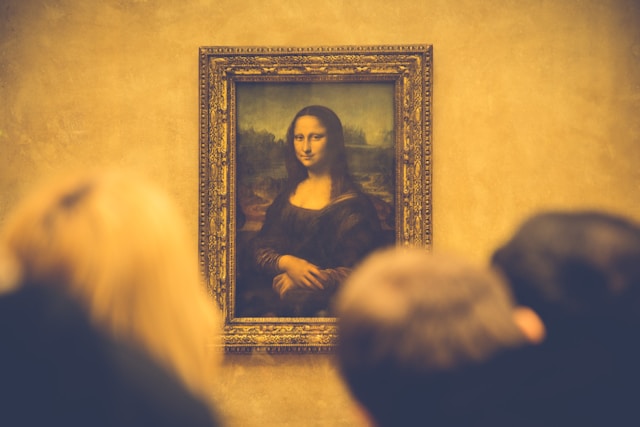
Leonardo da Vinci – The Renaissance master was known for his meticulous attention to detail, and he favored small, fine-tipped brushes for his intricate drawings and paintings, such as the Mona Lisa.
Claude Monet – The founder of Impressionism preferred short flats (brights) and long flats (long flats) for his iconic plein air landscapes, allowing him to capture the sweeping gestures and vibrant colors of nature with bold, expressive strokes.
Frida Kahlo – The Mexican artist favored round and filbert brushes for her vibrant self-portraits and still lifes, using them to blend colors seamlessly and create rich textures in her work.
Choosing the Right Brush:
When selecting brushes, consider the following factors:
Bristle type. Choose between natural bristles (such as hog hair) for oil and acrylic painting, or synthetic bristles for watercolor and gouache.
Shape and size. Select brushes based on the desired application and the scale of your work. Round brushes are versatile, while flat brushes are ideal for covering large areas.
Quality. Invest in high-quality brushes with durable ferrules and well-crafted bristles to ensure longevity and consistent performance.
Artists’ brushes are essential tools that allow creators to express their vision and bring their ideas to life on canvas. By understanding the different types of brushes and their characteristics, painters can choose the right tools for the job and unlock their full creative potential.
 Canvas For Painting - Custom Size
Leave a comment