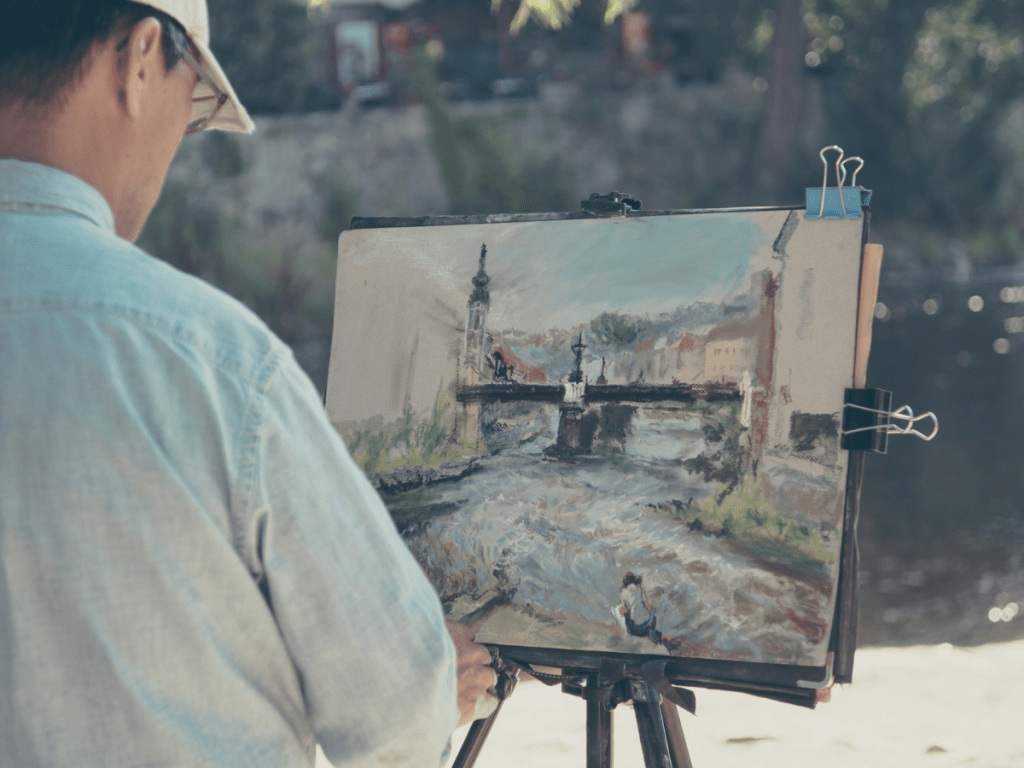
Plein air painting, derived from the French phrase “en plein air,” meaning “in the open air,” is the practice of painting landscapes outdoors. This method allows artists to capture the natural light, atmosphere, and essence of their surroundings directly onto the canvas. Many renowned artists have made significant contributions to this genre, leaving a lasting impact on the art world.
Claude Monet
Claude Monet is perhaps the most famous plein air artist. A leading figure in the Impressionist movement, Monet’s dedication to painting outdoors transformed how landscapes were perceived and represented.
His series, such as “Haystacks” and “Water Lilies,” showcase his mastery of light and color, capturing the changing moods and seasons with remarkable precision. Monet’s ability to portray the fleeting effects of light and atmosphere cemented his legacy as a pioneer of plein air painting.
Camille Pissarro
Danish-French painter Camille Pissarro was another key figure in the Impressionist movement. He is celebrated for his depictions of rural and urban scenes.
Pissarro’s plein air paintings often feature fields, villages, and bustling cityscapes, rendered with a vibrant, spontaneous touch. His works, such as “The Boulevard Montmartre at Night,” exhibit a keen observation of daily life and a profound understanding of natural light, making him a vital contributor to the plein air tradition.
John Singer Sargent
John Singer Sargent was an American expatriate artist known for his portraits and also made significant contributions to plein air painting. Sargent’s landscape works are characterized by their loose brushwork and luminous quality.
His ability to capture the interplay of light and shadow is evident in pieces like “Carnation, Lily, Lily, Rose,” which depicts two young girls lighting lanterns in an English garden. Sargent’s plein air paintings blend realism with Impressionism, creating a unique and elegant style.
Winslow Homer
Winslow Homer was a prominent American plein air artist known for his powerful seascapes and rural scenes. Homer’s plein air works, such as “Breezing Up (A Fair Wind)” and “The Gulf Stream,” capture the rugged beauty and drama of the natural world. His use of watercolor and oil paints to depict the dynamic interplay of light, weather, and landscape has earned him a place among the great masters of plein air painting.
Joaquin Sorolla
Joaquin Sorolla, a Spanish painter, is celebrated for his luminous plein air works that capture the intense Mediterranean light. Sorolla’s paintings, like “Strolling along the Seashore,” showcase his ability to portray the shimmering effects of sunlight on water and skin. His vibrant palette and energetic brushwork bring to life the coastal scenes and landscapes of Spain, making him one of the foremost plein air artists of his time.
Final Thoughts
Plein air painting has been a vital force in the art world, allowing artists to capture the beauty of the natural world with immediacy and authenticity. The contributions of artists like Claude Monet, Camille Pissarro, John Singer Sargent, Winslow Homer, and Joaquin Sorolla have not only defined the genre but also inspired countless artists to embrace the challenges and rewards of painting outdoors. Their legacy continues to influence and enrich the world of art today.
 Canvas For Painting - Custom Size
Leave a comment