Got artist’s block? If you’re an amateur or a professional painter, discovering new sources of inspiration can help invigorate your work and push your artistic boundaries. Here are several strategies to find inspiration, along with examples of famous painters who have successfully used these approaches.
1. Nature and the Outdoors
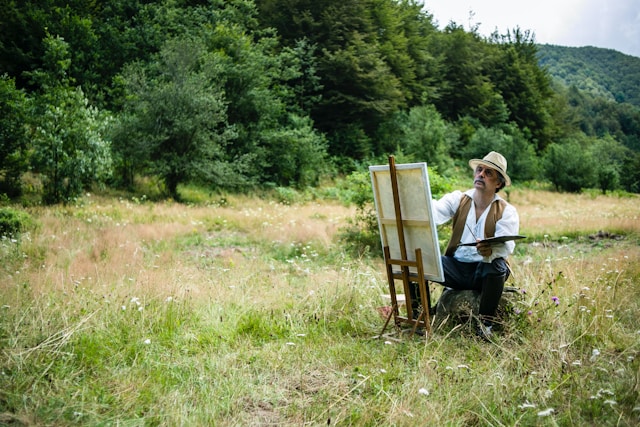
Nature has been a timeless source of inspiration for many artists. The ever-changing landscapes, colors, and light provide endless possibilities for exploration.
Famous painters like Claude Monet found immense inspiration in nature. His series of water lilies, haystacks, and the garden at Giverny showcase his deep connection with natural surroundings.
To find inspiration, take time to explore parks, forests, beaches, or even your own backyard. Observe the intricate details, the play of light and shadow, and the vibrant colors that nature offers.
2. Urban Environments
Cityscapes and urban environments can be equally inspiring. The hustle and bustle of city life, architectural structures, and street scenes offer a rich tapestry of visual stimuli.
Edward Hopper is a prime example of an artist who drew inspiration from urban settings. His paintings capture the solitude and introspection of city life, often depicting everyday scenes with a unique emotional depth.
Walk through your city, take photographs, and sketch scenes that catch your eye. The contrast between natural and man-made elements can spark creative ideas.
3. Personal Experiences and Emotions
Your own life experiences and emotions are powerful sources of inspiration. Frida Kahlo, known for her deeply personal and emotive works, often painted her pain, passion, and identity. Her self-portraits reveal her internal struggles and triumphs, making her art intensely relatable.
Reflect on your own experiences, memories, and feelings. Translate these into visual forms, using color, composition, and symbolism to express your inner world on canvas.
4. Literature and Music
Literature and music can evoke strong visual images and emotions, providing a rich source of inspiration. Belarusian-French artist Marc Chagall often drew inspiration from literature and folklore, creating dreamlike paintings that blend reality with fantasy.
Listen to different genres of music, read novels, poetry, or even mythological tales. Pay attention to the emotions and imagery they evoke. Let these influences guide your artistic expression.
5. Travel and New Cultures
Traveling exposes you to new cultures, landscapes, and ways of life, all of which can be incredibly inspiring. Paul Gauguin’s travels to Tahiti led to some of his most famous works, infused with the vibrant colors and cultural elements of the island.
Traveling doesn’t always mean going far; even a visit to a neighboring town or a local cultural festival can provide fresh perspectives. Capture your experiences through sketches and photographs, and use them as a foundation for your paintings.
6. Art History and Other Artists
Studying the work of other artists can provide valuable insights and inspiration. Vincent van Gogh was greatly inspired by Japanese prints, which influenced his use of color and composition.
Visit art museums, galleries, and exhibitions to see a wide range of styles and techniques. Think about what resonates with you and why. Experiment with using elements of these styles into your own work.
Inspiration for canvas painting can be found in many places. By actively seeking out these sources and staying open to new experiences, you can continuously fuel your creativity and develop a rich, diverse body of work.
 Canvas For Painting - Custom Size
Leave a comment