Still life paintings, often depicting inanimate objects, are rich with symbolism that conveys deeper meanings beyond their aesthetic appeal. Artists have historically used various items to represent concepts such as mortality, wealth, and the transient nature of life. Understanding these symbols enhances our appreciation of the artwork and offers insight into the cultural and historical contexts in which they were created.
1. Skulls (Memento Mori)
The inclusion of a skull in still life paintings serves as a stark reminder of human mortality. This symbol, known as “memento mori” (Latin for “remember you must die”), urges viewers to reflect on the fleeting nature of life and the inevitability of death. Paul Cézanne’s “Still Life with Skull,” painted in 1898 is one example of an oil painting with skull as its subject.
Such imagery was common in 16th and 17th-century Dutch vanitas paintings, which aimed to encourage contemplation of life’s shortness and the futility of earthly pursuits.
2. Candles

Candles in still life art are multifaceted symbols. A lit candle often represents light, knowledge, and the presence of spiritual truth. Meanwhile, an extinguished candle signifies loss, death, or the passage of time. The gradual melting of a burning candle can also symbolize the inevitable march toward mortality, emphasizing the temporary nature of life.
3. Flowers

Flowers are common in still life paintings. They symbolize the fleeting beauty of life. Their vibrant colors and delicate forms represent nature’s bounty, but their inevitable wilting serves as a reminder of life’s end. Specific flowers carry additional meanings. For example, roses often symbolize love and passion, while lilies are associated with purity and resurrection.
4. Fruits
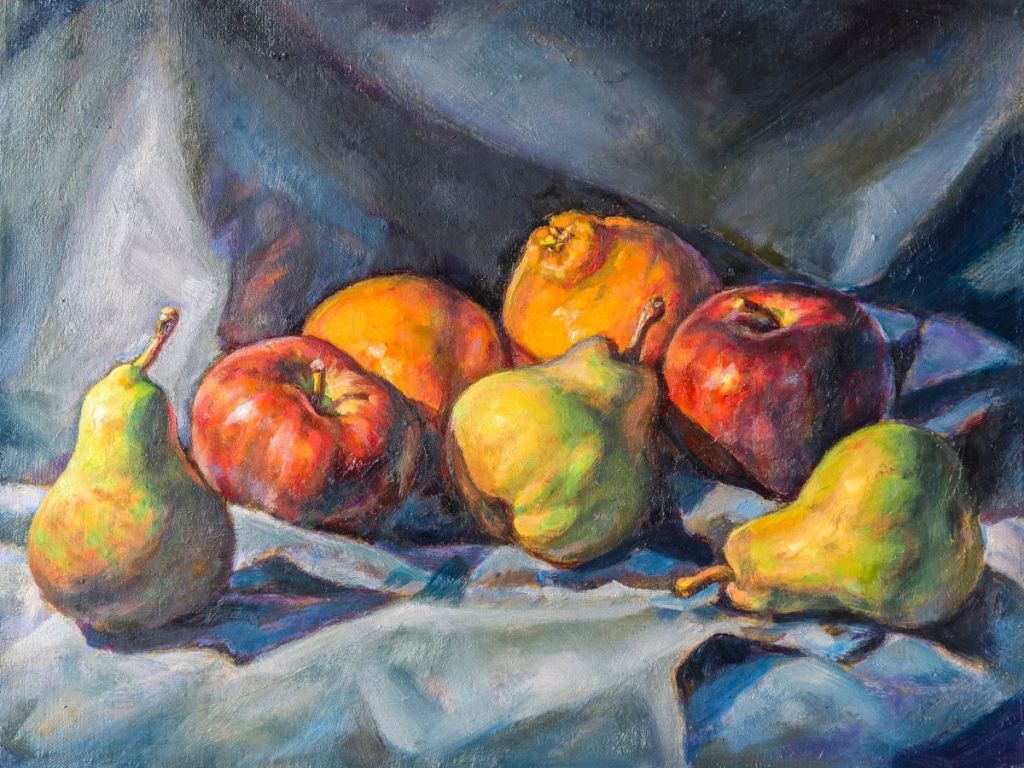
Fruits in still life art can convey different messages. Ripe, abundant fruit symbolizes fertility, prosperity, and the pleasures of life. However, overripe or decaying fruit serves as a reminder of decay. Apples, in particular, can represent knowledge, temptation, or the fall of man, depending on the context.
5. Musical Instruments

Musical instruments in still life paintings often symbolize the momentary nature of sensory pleasures. Music, being transient and intangible, serves as a metaphor for life’s fleeting moments and the vanity of earthly pursuits. In some contexts, they may also represent harmony and the arts.
6. Books
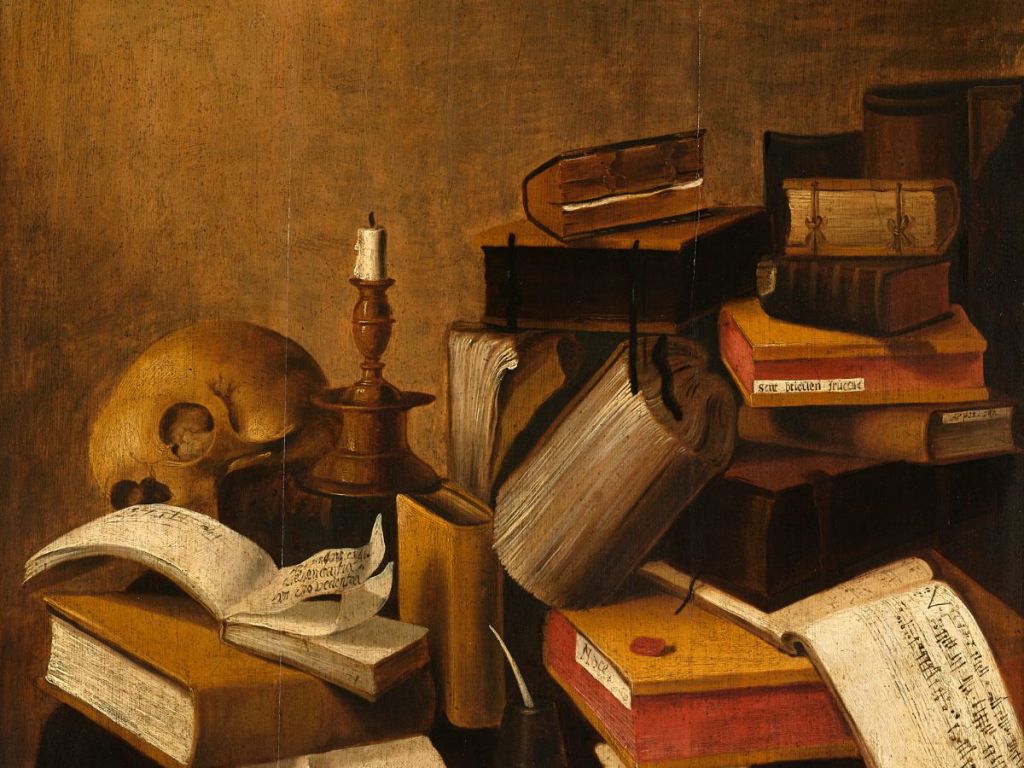
Books are symbols of knowledge, learning, and the human pursuit of wisdom. In still life compositions, they may also mean the transient nature of intellectual achievements, especially when joined with symbols of mortality like skulls or hourglasses.
7. Mirrors

Mirrors in still life art can symbolize self-reflection, truth, and vanity. They encourage viewers to contemplate and consider the distinction between appearance and reality. Also, mirrors can serve as a reminder of the fleeting nature of beauty and the superficiality of material possessions.
8. Shells
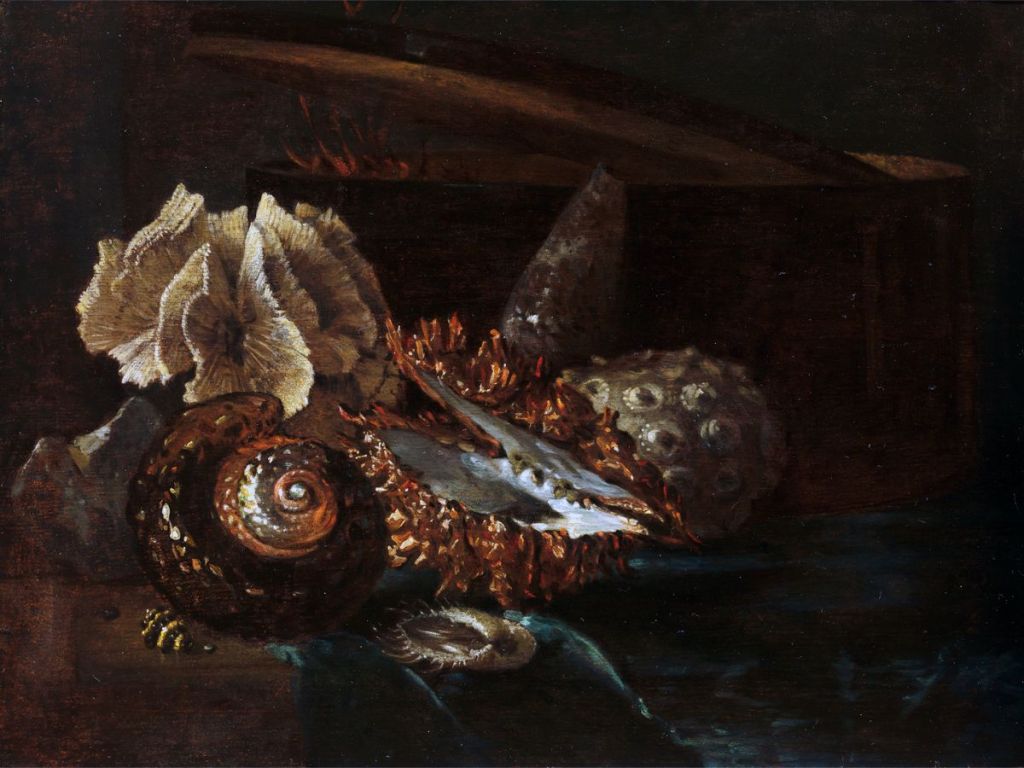
Seashells often represent wealth and the exotic, as they were rare and valuable items in certain historical contexts. They can also symbolize the journey of life, given their association with the sea and travel. In religious contexts, shells may signify pilgrimage or spiritual journeys.
9. Hourglasses and Watches
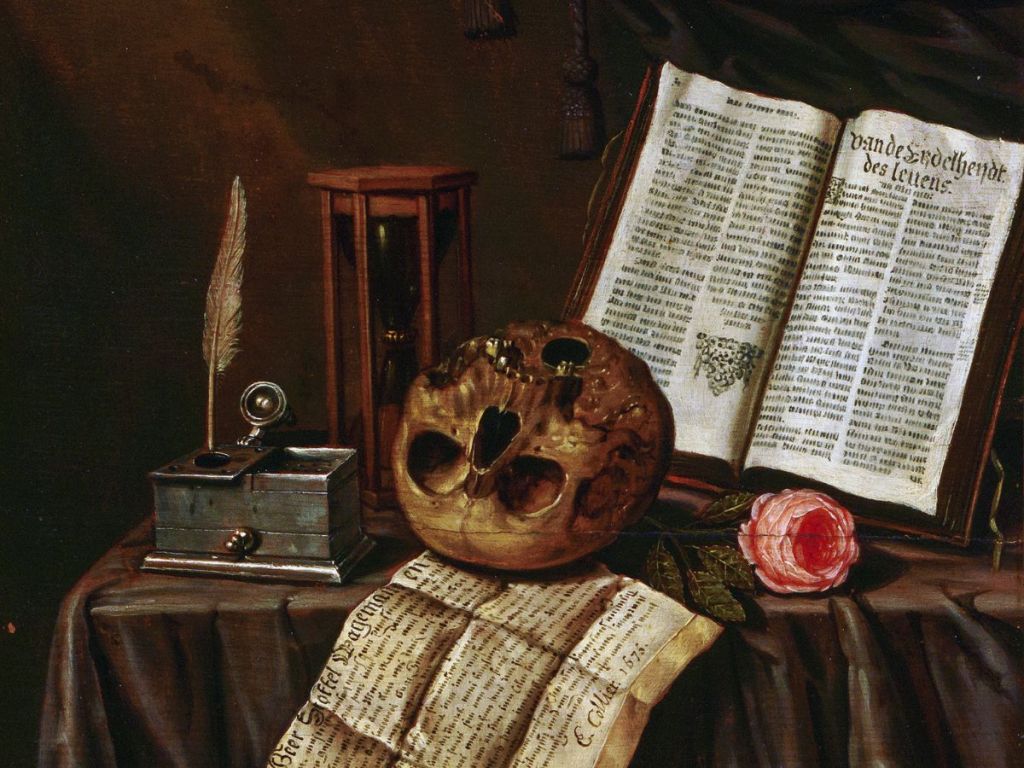
Timepieces like hourglasses and watches are potent symbols of the passage of time and life’s limit. Their inclusion in still life paintings serves as a memento mori, reminding viewers that time is constantly advancing, urging them to reflect on their mortality and the transient nature of worldly achievements.
10. Insects

Insects, such as butterflies, flies, or beetles, can carry varied symbolism. Butterflies often represent transformation and the soul, while flies and beetles might signify decay, corruption, or the darker aspects of life. Their presence in still life paintings can underscore themes of mortality or the impermanence of beauty and life.
Knowing the symbolism behind still life paintings, viewers can gain a deeper understanding of the artists’ intentions and the cultural contexts of their time. These artworks transcend mere aesthetic appeal, offering rich narratives about human existence, morality, and the passing nature of worldly pleasures.
 Canvas For Painting - Custom Size
Leave a comment