Contemporary art can feel tricky and sometimes even bewildering. But interpreting it doesn’t require credentials, just curiosity and a few simple tools. Here’s how to dive in, naturally and confidently.
1. Look First, Think Later
Take time. Pause in front of the work. Notice materials, brushwork, textures, shapes, colors, and scale before jumping to conclusions. Let your eyes lead. This slow, deliberate looking builds insight from observation, not assumptions.
2. Separate Form and Content
Break the artwork into two parts:
- Form = what you see such as color, composition, techniques.
- Content = what it’s about—meaning, story, themes.
Separating them helps you see both how it’s made and what it’s saying.
3. Ask Simple Questions
- What dominates your attention?
- What emotions emerge—calm, tension, curiosity?
- Why did the artist choose those materials or colors?
These questions open a personal dialogue.
4. Bring in Context
Use titles, gallery notes, artist bios, or era/cultural background. It isn’t cheating, it simply completes the picture.
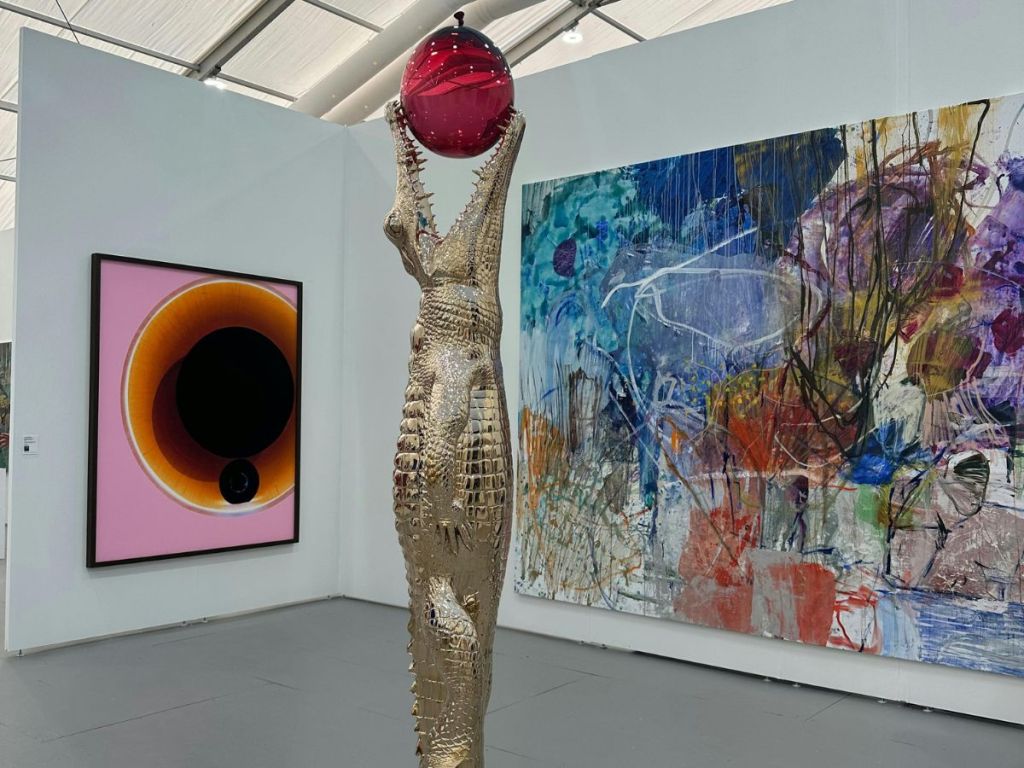
5. Feel Your Feelings
Emotions are valid clues. Contemporary art often aims to evoke layered ones. Your reaction is part of the interpretation.
6. Embrace Multiple Interpretations
There’s no single “correct” takeaway. A painting can mean one thing to you today, and another next month. Good interpretations are thoughtful, not final.
7. Reflect, Wonder, Respond
Step through art critic Terry Barrett’s method:
- Reflect on what you see.
- Wonder about why it’s made that way.
- Respond with your own meaning. Say it out loud or note it down.
Quick “TABULA” Refresher
Adopt Ossian Ward’s TABULA method for clarity:
- Time: pause.
- Associate: find a detail that connects.
- Background: check labels or bio.
- Understand: see if context shifts meaning.
- Look again: revisit with fresh eyes.
- Assess: form your own angle.
Interpretation isn’t about getting it right, it’s about engaging with the work. Take your time, stay curious, and let your feelings guide you.
 Canvas For Painting - Custom Size
Leave a comment