You’ve spent hours on a painting, print, or mixed-media piece but when it’s on the wall, it doesn’t feel as striking as you hoped. The good news is that how you present your art matters just as much as what’s on the canvas. With a few thoughtful choices, you can make virtually any artwork feel intentional, polished and expensive. Here’s how.
1. Choose the Right Frame and Mat
The quickest way to elevate your art is with a well-chosen frame. Frames give structure, visual weight and a sense of finish that makes even modest pieces feel curated. Classic wood or metal frames tend to look timeless, while floating frames add a contemporary gallery quality. A mat board around artwork adds breathing room and focus, giving your piece a more formal, high-end appearance.
If you’re concerned about cost, look for quality thrift store frames or consider DIY upgrades. Cleaning them up or repainting them in a cohesive palette can make inexpensive frames feel custom-made.
2. Get Your Lighting Right
Lighting does more than reveal colors–it draws the eye and adds dimension. Strategic lighting such as track lights, picture lights or even adjustable spotlights can make subtle textures and depth read clearly from a distance. Even simple directional lighting with warm bulbs enhances shadows and highlights, helping your artwork feel like a feature piece in the room.
Gallery lighting techniques like “wall washing,” where lights are placed to cast an even glow across an art wall, can create a calm, refined backdrop that elevates everything it touches.
3. Think About Placement and Scale
Art looks more expensive when it feels purposefully placed. A few key placement rules make a surprising difference:
- Hang art at eye level (roughly 57-60 inches to the center). This is a pro rule of thumb that keeps works comfortable to view.
- Use the right scale. Large pieces can act as dramatic focal points that immediately elevate a space; smaller artworks can feel precious and refined when grouped intentionally.
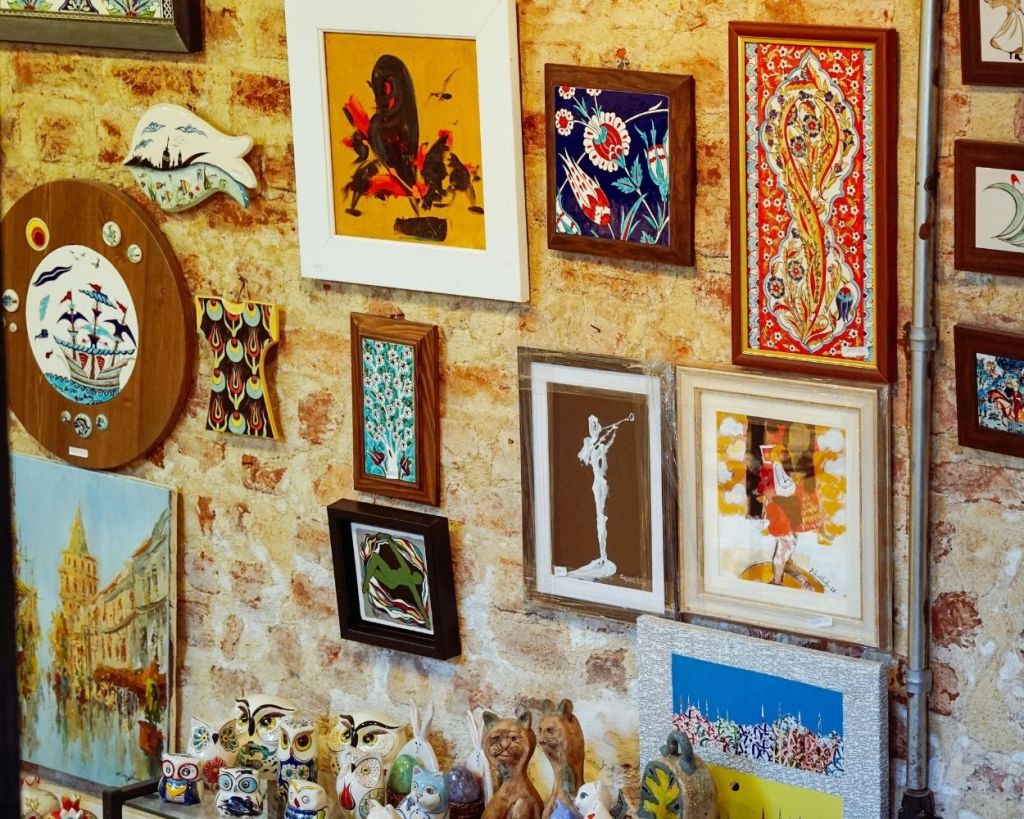
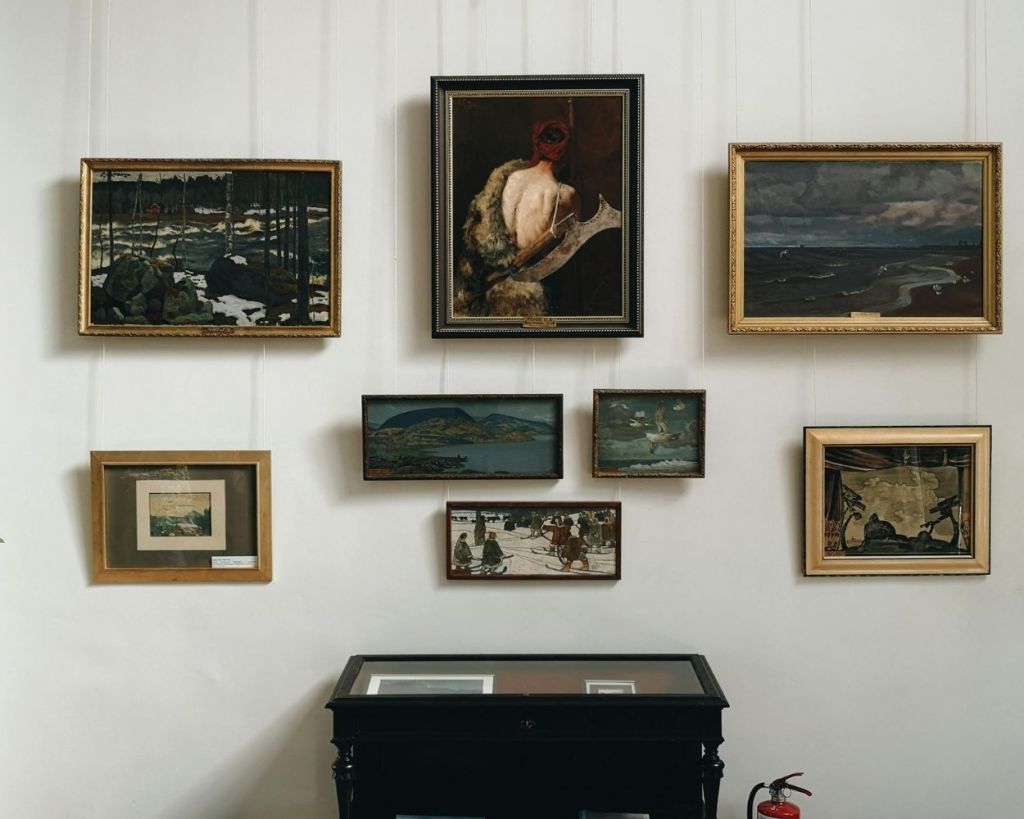
When multiple pieces live on the same wall, consistent spacing and a unified theme or color palette makes the display feel curated, not cluttered.
4. Curate Thoughtfully
Expensive-feeling art spaces aren’t random. They feel chosen. That doesn’t mean every piece must be expensive, what matters is cohesion. Consider limiting a gallery wall to works that share a color family, a theme or a mood. Balance variety and unity so each piece supports the others, rather than competes for attention.
Seasonal rotation keeps displays fresh and intentional. Swapping out pieces periodically can make your art wall feel dynamic and considered, like a rotating gallery.
5. Add Texture and Layers
Luxury isn’t flat. Adding texture whether through art prints on canvas, mixed-media pieces, or tactile wall hangings like textiles, deepens visual interest. Pairing frames and canvas with complementing décor elements (shelves, sculptural objects, or soft textiles) helps integrate your art into the space like a designed collection, not an afterthought.
6. Less Can Be More
Ironically, not overcrowding walls often feels more expensive. Leaving negative space around key pieces gives them room to breathe and makes each one read as intentional. Think quality over quantity. Even a single compelling piece can command a room.
 Canvas For Painting - Custom Size
Leave a comment