Large-scale painting changes everything. The body moves differently. The viewer stands differently. The story feels bigger. For those of us who paint, studying monumental works isn’t about size alone. It’s about ambition, structure, and impact.
Here are seven of history’s most famous large-scale paintings and why they still matter.
1. The Night Watch – Rembrandt (1642)
At nearly 12 by 14 feet, this civic guard portrait broke tradition. Instead of static figures, Rembrandt created drama through light and motion. The scale amplifies the theatrical composition. It feels alive because it was designed to overwhelm the room.

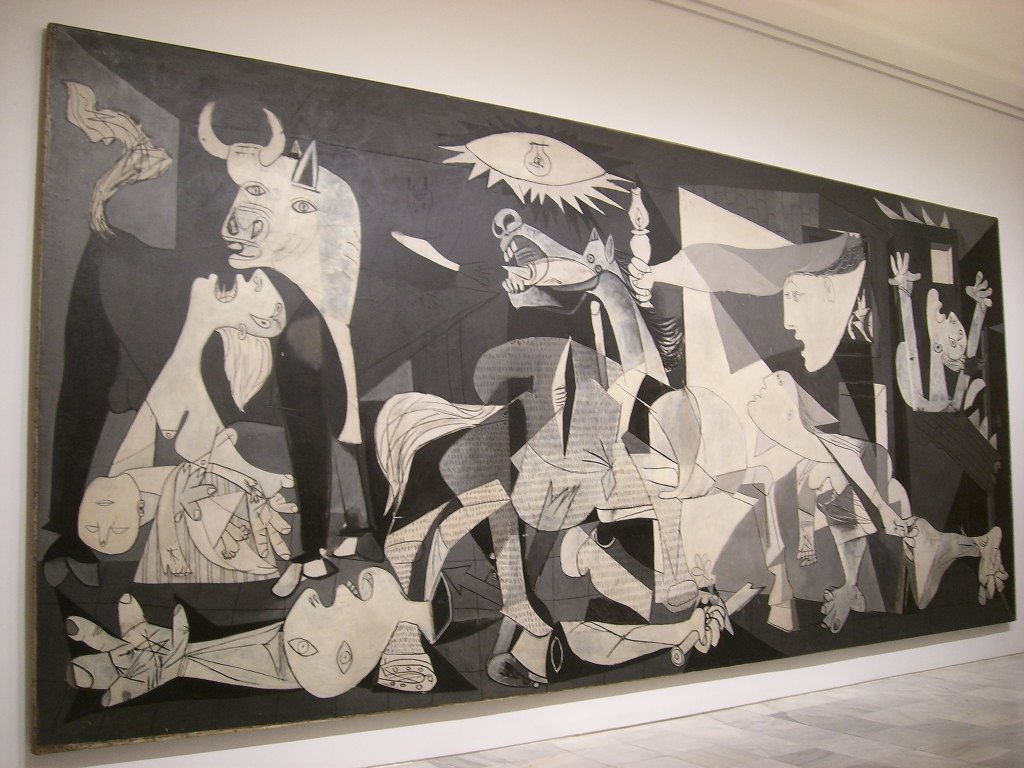
2. Guernica – Pablo Picasso (1937)
Over 11 feet tall and 25 feet wide, this anti-war masterpiece proves scale can serve urgency. Painted in response to the bombing of Guernica during the Spanish Civil War, its size forces confrontation. You don’t glance at it. You face it.
3. The Last Supper – Leonardo da Vinci (1495–1498)
Spanning an entire refectory wall of Santa Maria delle Grazie in Milan, this work shows how scale can control space. Leonardo structured perspective so the architecture extends the painting itself. It’s immersive because it was built into the room.

The Last Supper, mural painting by Leonardo da Vinci, c. 1495–1498, 15 ft x 28.8 ft; in Santa Maria delle Grazie, Milan, Italy. The photo is licensed under CC BY-SA 4.0.
4. The School of Athens – Raphael (1509–1511)
A sweeping fresco in the Vatican, this is intellectual ambition on a grand scale. Dozens of figures, precise architecture, and clarity of composition. Large works demand discipline, and Raphael delivers it.

5. Las Meninas – Diego Velázquez (1656)
At over 10 feet tall, this painting manipulates perspective and viewer position. Velázquez uses scale to blur the line between observer and subject. The size makes the illusion convincing.

6. Liberty Leading the People – Eugène Delacroix (1830)
This monumental canvas measuring 8.5 ft by 10.66 ft captures revolution with physical force. The large format of Liberty Leading the People intensifies movement and emotion. Romanticism needed scale to carry its energy.

7. The Birth of Venus – Sandro Botticelli (c. 1484–1486)
Though more lyrical than explosive, its near life-size scale elevates myth into presence. It was never meant to feel small or decorative. It was meant to command attention.

Why does scale matter today? Because size forces decisions. Composition must hold together from across a room. Gesture becomes physical. Structure becomes essential.
Whether you work small or large, studying these paintings sharpens your understanding of ambition, clarity, and spatial control. Large-scale work isn’t just about bigger canvases. It’s about bigger thinking.
 Canvas For Painting - Custom Size
Leave a comment