If you’re new to painting on canvas, the first real decision isn’t what to paint. It’s what to paint with. Walk into any art store and you’ll see rows of options. Acrylic, oil, watercolor, gouache. It’s easy to get stuck before you even begin.
So let’s keep it simple. For most beginners, acrylic paint is the best place to start.
Why acrylic is the easiest entry point
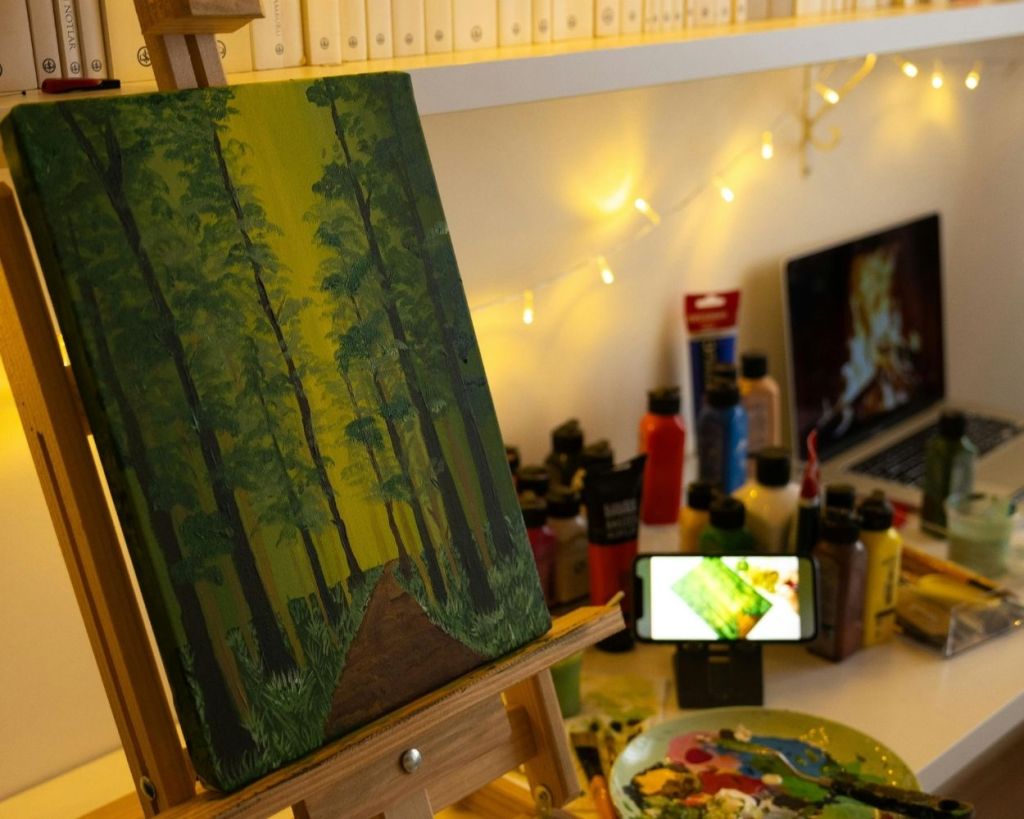
Acrylic paint is popular for a reason. It’s water-based, which means you don’t need solvents or special ventilation. You can thin it with water, clean your brushes easily, and paint indoors without much setup.
It also dries fast. That can feel frustrating at first, but it’s actually helpful when you’re learning. You can layer quickly, fix mistakes, and keep moving without waiting days for paint to dry.
Most importantly, acrylic works well on pre-primed canvas, which is what you’ll likely be using as a beginner. It grips the surface easily and behaves predictably.
If you want something reliable and low-maintenance, acrylic is hard to beat.
What about oil paint?
Oil paint is often seen as the “serious” option, and yes, it has qualities that many artists love. Longer drying time, richer blending, and a certain depth of color that’s hard to replicate.
But it comes with extra steps.
You’ll need solvents or mediums, more time between layers, and a bit more awareness of things like ventilation and surface preparation. There’s also the fat-over-lean principle to think about if you’re layering.
For a beginner, that can slow things down.
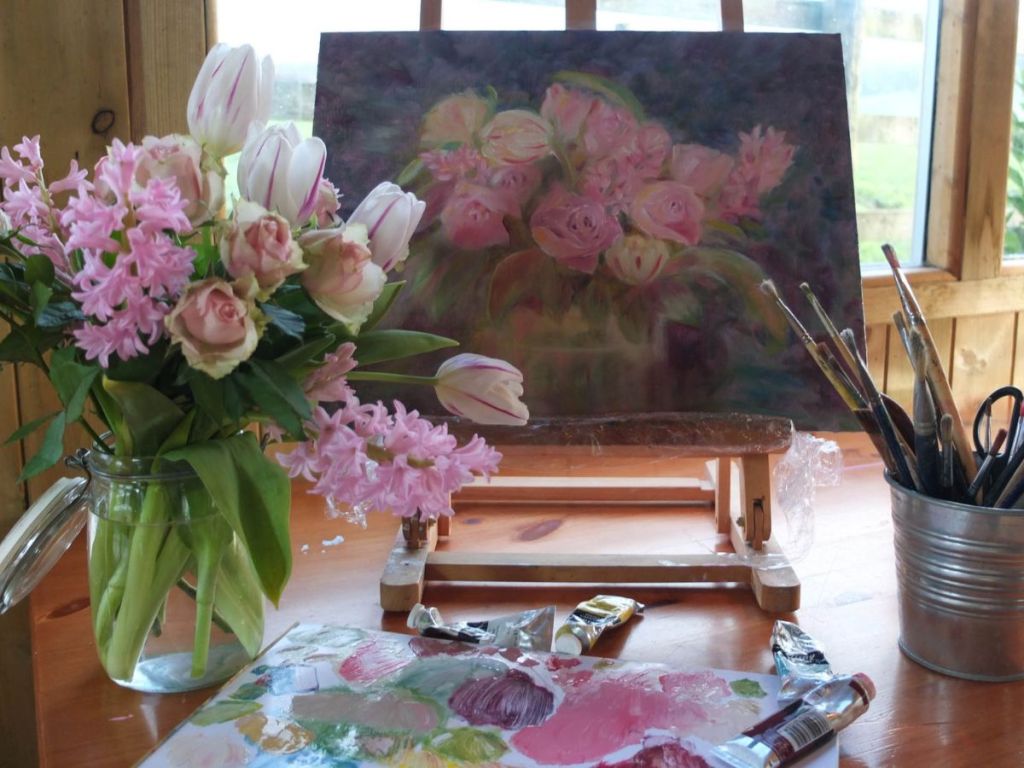
That said, if you’re drawn to oil, don’t avoid it entirely. Just know that it asks for more patience and a bit more setup. Some newer water-mixable oils try to bridge the gap, offering easier cleanup while keeping the feel of traditional oils.
And watercolor or gouache?
Watercolor isn’t ideal for canvas. It’s designed for paper, where it can absorb and spread in a controlled way. On canvas, even primed canvas, it tends to sit awkwardly unless the surface is specially prepared.
Gouache behaves a bit better, but still isn’t the most natural fit for standard canvas.
If canvas is your surface, acrylic or oil will give you a smoother experience.
Student vs artist grade
This part matters more than most beginners realize.
Student-grade paints are cheaper and great for practice, but they contain less pigment and more filler. Colors can look weaker and require more layers.
Artist-grade paints cost more but go further. You use less paint to get strong color, and the results are more consistent.
If your budget allows, a small set of artist-grade acrylics is a smart investment. If not, start with student-grade and upgrade a few key colors over time.
A simple way to choose
If you want fast, easy, and flexible: go with acrylic. If you want slower, more traditional, and don’t mind the setup: try oil.
There’s no perfect choice, just the one that helps you keep painting. Because in the end, the best paint for a beginner isn’t the most expensive or the most advanced. It’s the one that makes you want to come back and do it again.
 Canvas For Painting - Custom Size
Leave a comment